· News
Every OpenTwin starts with a body scan: the BodyLoop arrived
Robin Wilkening, Open Science Institute
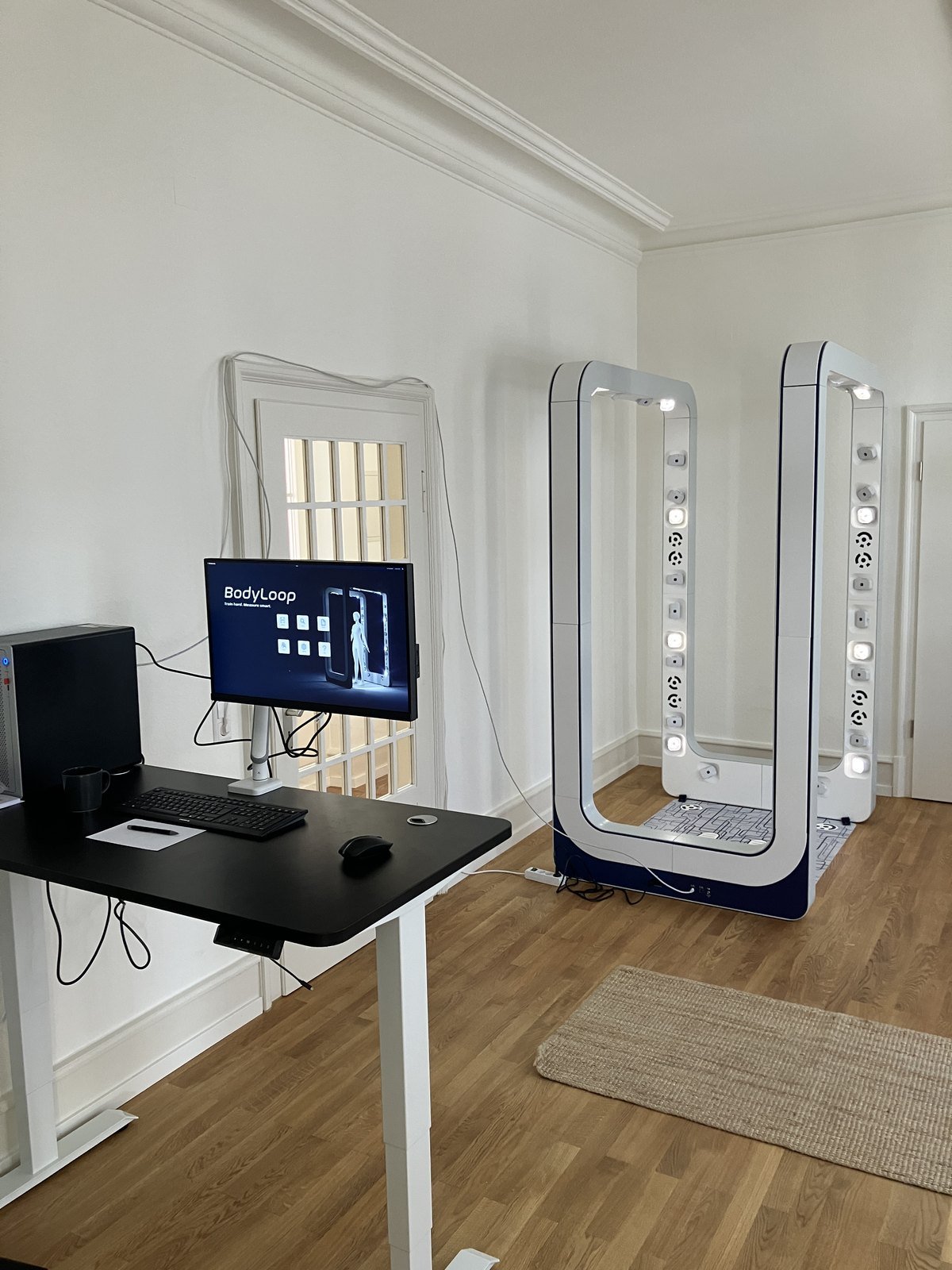
On 10 July 2026 we finished setting up the Vitronic BodyLoop scanner at the OpenTwin project. This important step changes what OpenTwin is, because until now we have been working with data about bodies, but now we can measure one.
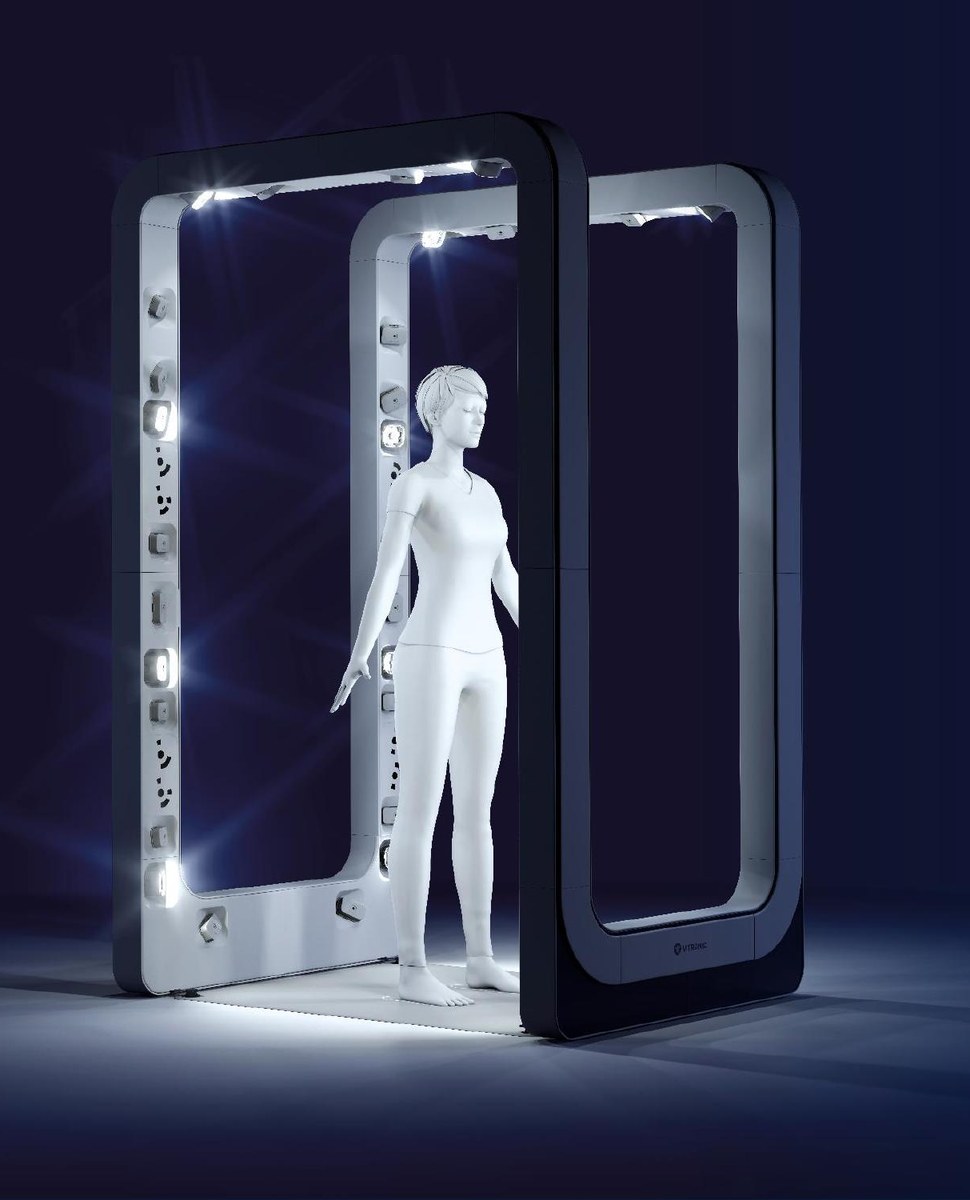
What it does
You step onto the mat with no preparation beyond taking your shoes off and stand still. Thirty-two auto-calibrated sensors and sixteen projectors capture the surface of the body from every side, taking 0.3 seconds.
The surface comes back at 25 points per square centimetre, and the machine needs roughly two minutes to process it. The software then does the tedious part. It places anatomical landmarks on the surface automatically and works out distances, heights, circumferences, angles and volumes, along with a posture analysis. Two scans can even be laid over one another, which means you can follow the same person over time rather than describing them only once.
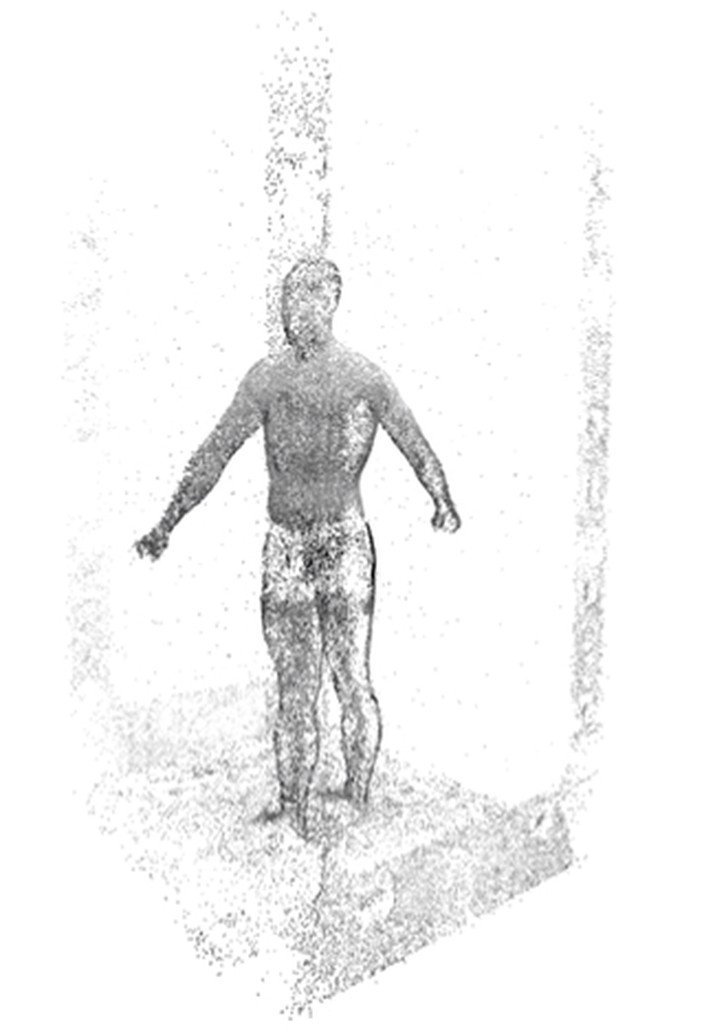
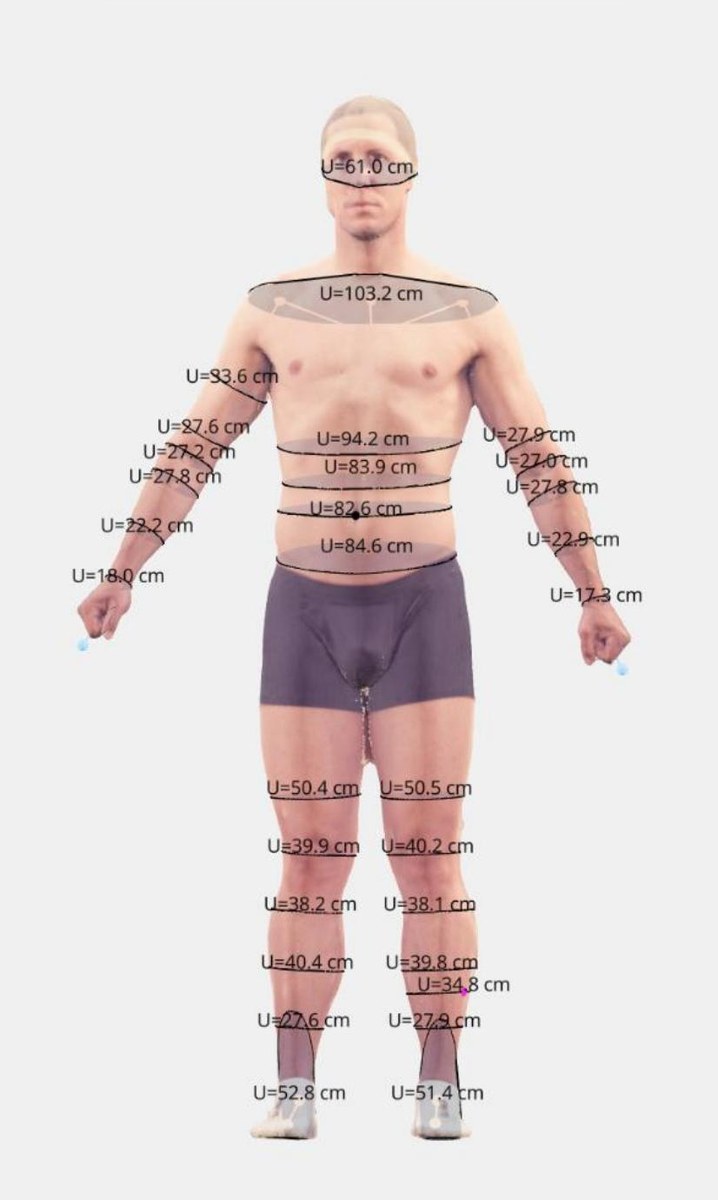
Vitronic's 3D photonic scanning is the gold standard for anthropometry in epidemiological research, used across cohorts to produce high-quality longitudinal body scans: the Swiss conscript cohorts at the University of Zurich, where scans were validated against manual anthropometry and then used to predict fat and muscle mass; the LIFE-Adult study in Leipzig, which tested the reliability of 3D laser-based anthropometry against classical measurement.
Why this matters for a digital twin
In most human twins built so far, that top layer is the weakest one. Anatomy usually gets in as a population average, a BMI number, or a clinical scan taken years ago. What we have now instead is a real measurement of a real person on a known date. Preventive medicine has wanted signals like these for years, but the measurements were usually too expensive or too invasive to repeat often enough to catch them.
But there is another reason, and it matters to us more than it might sound. A scan of your own body is something you can look at and recognise. That is the difference between a dummy twin and a highly personal twin that is run on you. It gives the twin ground truth, so a model predicting how a body will change can be checked against how it actually changed.
What comes next
Protocol first, data second. We are working out a scan procedure we can reliably repeat, and we want to know how much the measurement wobbles on its own before we start attributing any of that to biology. Alongside it come the unglamorous questions: how scans get stored and versioned, how they connect to the rest of the twin, and how consent and governance work, written into the pipeline rather than bolted on afterwards.
The argument for that openness is set out at length in our chapter Building an Open Twin Ecosystem, in the forthcoming Open Access volume Digital Twins in Medicine.
More about the OpenTwin project.
Licensed under CC BY 4.0. Free to share and adapt with attribution. (link opens in a new tab)