· News
openUC2: can biophoton imaging be made affordable?
Martin Etzrodt, Open Science Institute
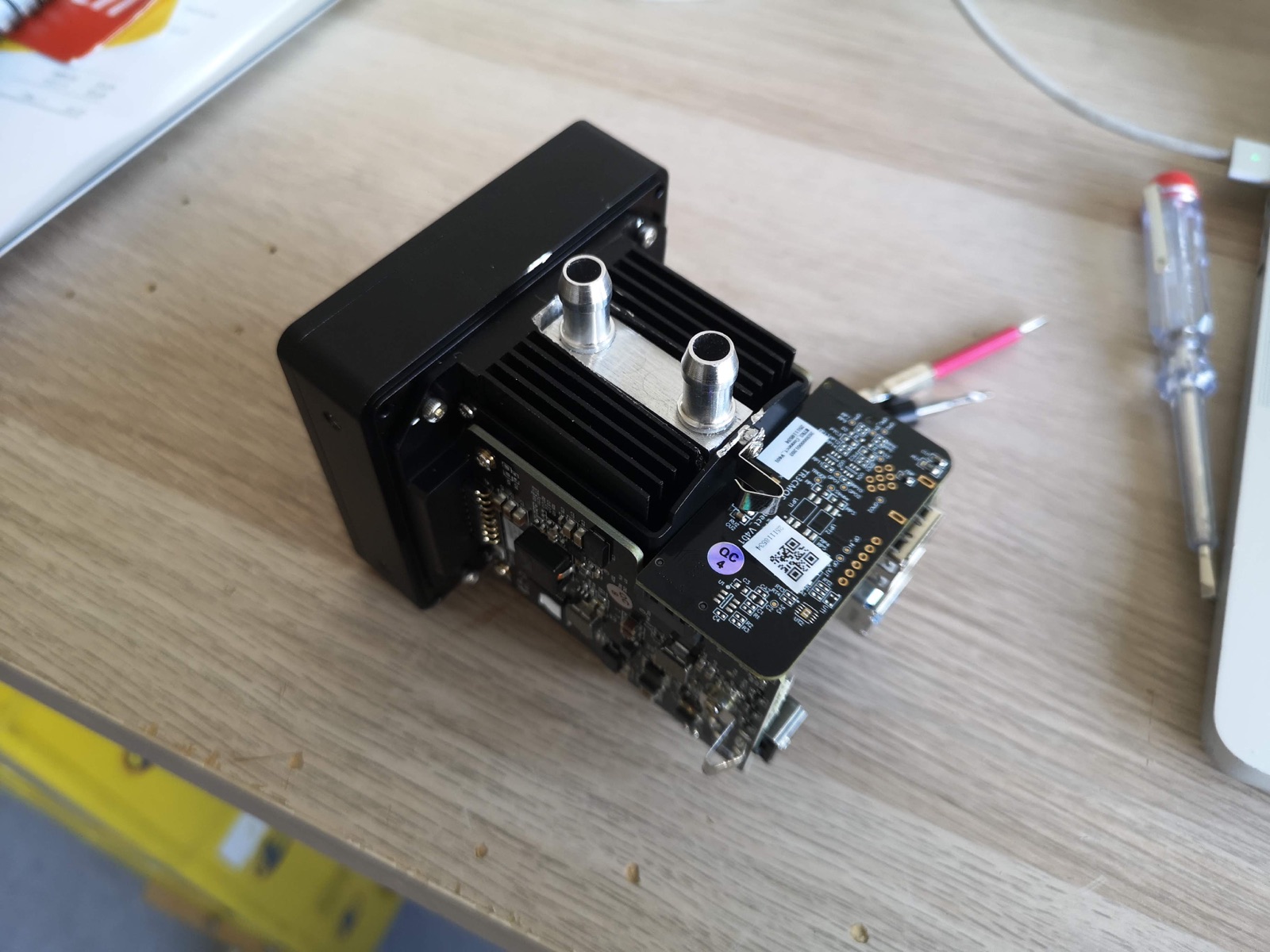
Benedict Diederich and the team at openUC2 have published their own account of the biophoton microscope they built with us. It starts with a question the Open Science Foundation (OSF) brought to them: can the faint light emitted by living plant tissue be imaged on an open-source microscope, and can it be done without a camera that costs more than the rest of the instrument?
Read the full post on the openUC2 blog: Can Biophoton Imaging Be Made Affordable? Building an Open Microscope to Find Out
What they built
The first step was a reference system on the openUC2 FRAME. It pairs two low-magnification, high-numerical-aperture Nikon objectives, one facing the sample and one facing the sensor, with an Andor EMCCD camera cooled to -100°C. This setup detected emission down to a few photons per second per square centimetre over 30 to 60 minute exposures. It produced the first measurement campaign we reported in June. The catch is the camera, which alone costs about twice as much as the microscope around it.
The second step was to replace it. Calculations by their colleague David suggested that a back-illuminated, cooled CMOS camera of the kind used in amateur astrophotography could detect plant biophotons if its sensor ran cold enough. The stock air cooling stopped at -10°C. The team cut off the cooling block with a band saw, milled the surface behind the sensor flat, and attached a water block fed with 10°C water from a chiller. The sensor reached -30°C, the temperature the IMX571 datasheet gives as the best trade-off between dark current and quantum efficiency. A second Peltier stage reached lower still, but brought condensation and ice and used more power, so they dropped it.
First results from the modified camera show photon emission at the wound site of a leaf over a 30 minute exposure. The cooling adds nothing to the camera's footprint.
Why it matters to us
The Open Science Institute (OSI) wants this measurement to be possible for groups that cannot buy a scientific EMCCD. A working low-cost detector is the first requirement for that. The next steps are calibration against the reference system and replicate experiments across species and stress conditions.
Licensed under CC BY 4.0. Free to share and adapt with attribution. (link opens in a new tab)