A project of the Open Science Institute
OpenTwin Lab
Build and validate human digital twins on open standards
OpenTwin Lab provides standards, protocols, and reference pipelines to build, validate, and apply digital twins without centralizing personal health data.
Problem
Healthcare is fragmented.
Data infrastructure lacks interoperability.
Digital twin implementations are built in isolation.
OpenTwin Lab provides the missing foundation.
Positioning
What OpenTwin Lab is (and is not)
Not a product
→ provides open standards and protocols
Not a data platform
→ provides validation layer
Not a healthcare application
→ provides reference implementations
How it works
Health data from several sources, mapped to one standard
Sources
Wearables, a 3D body scanner, health records, lab results and genome files.
Connectors
One package per source reads its data and maps it to FHIR R4.
Shared FHIR contract
Whose data it is, which codes describe it and which units it carries are decided once, in fhir-core.
Checks
Every pull request checks codes, UCUM units and example bundles against the HL7 validator.
Reconcile
When two sources report the same measure on the same day, aggregate picks one on published evidence. Every source value is kept.
Interpret (research)
A research module compares lab biomarkers with reference ranges and reports one state per body system.
Ask (TwinLLM)
TwinLLM, the agentic layer, takes the coded data and answers research questions with cited evidence, on an open model that can run locally.
View
OpenTwin XR shows the results on a 3D body, in the browser or on a headset.
Get started
open-twin is a set of TypeScript libraries that map health data from wearables, body scans, health records, lab results and genome files to FHIR R4. It is experimental software for research and non-medical wellness, not for diagnosis, treatment or other medical decisions.
- 01
Install Node 22 and pnpm 11.17.0
- 02
Install and build the workspace
- 03
Run the checks and tests
- 04
Emit example FHIR bundles
Implementations
Digital twins in action
OpenTwin Lab enables validated digital twin implementations across research and clinical environments.
Active
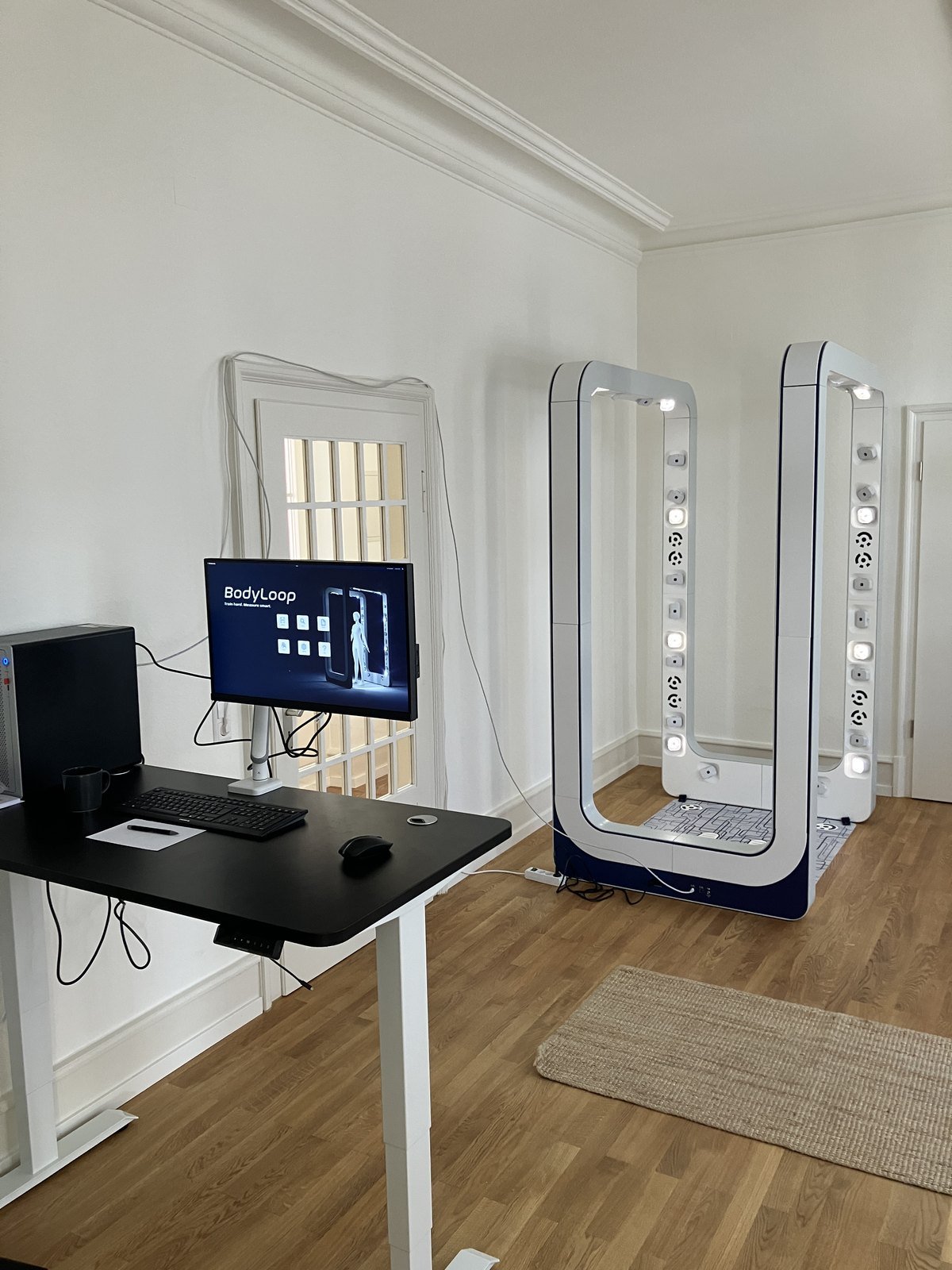
Body scanner in Freiburg
The VITRONIC BodyLoop at Medical Me in Freiburg scans the whole body in 0.3 seconds, without radiation. It is the first physical measurement layer of OpenTwin.
Active
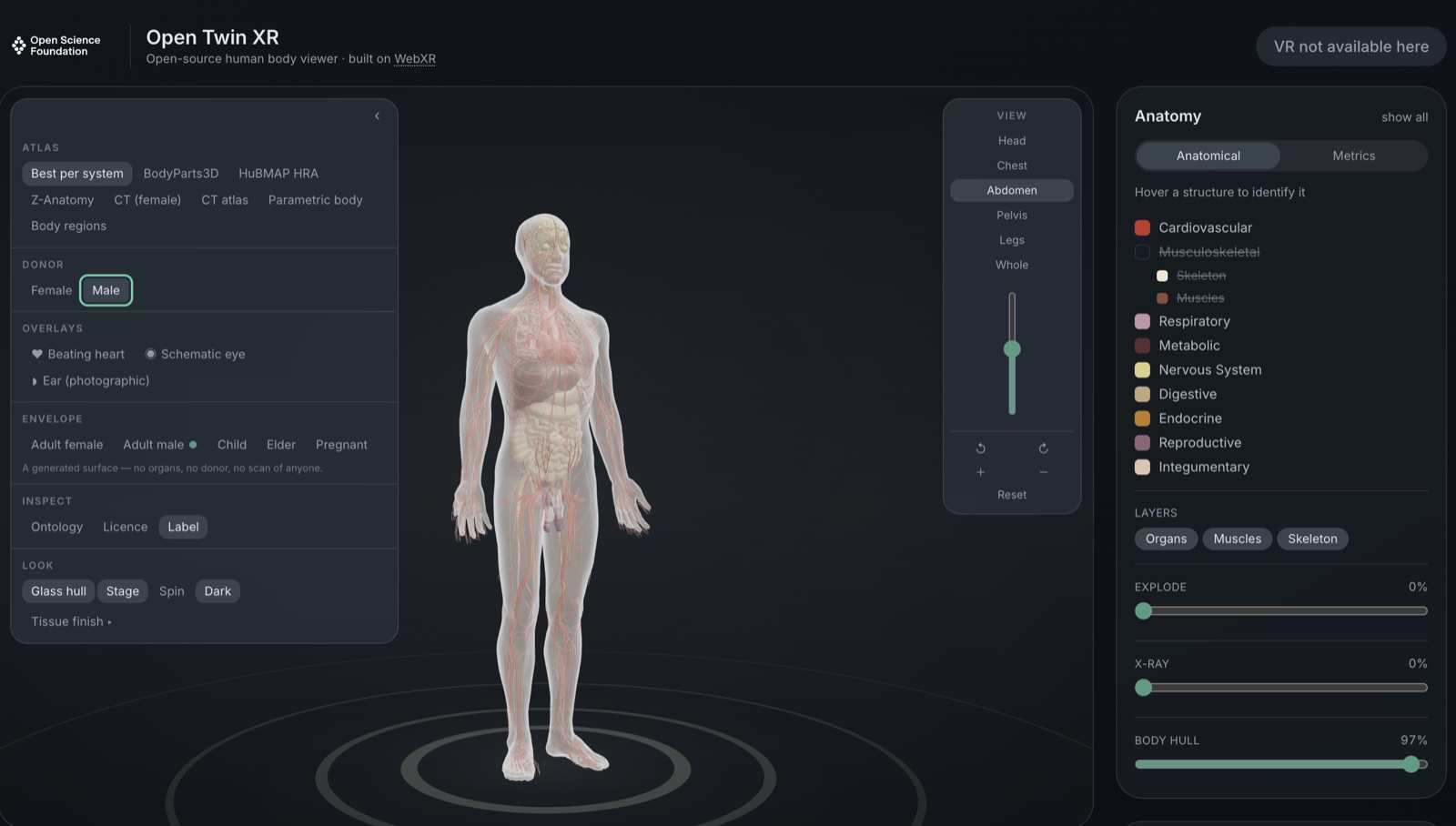
OpenTwin XR viewer
Our open-source 3D viewer of human anatomy. It brings several open atlases into one view, runs in the browser without installation, and works in WebXR headsets.

Coming soon
Etherlaken Twin Experience zone
A physical place to experience, explore, and understand one’s digital health twin, at the Open Twin Hub on the Etherlaken campus in Interlaken.
App-ready
Available connectors
WHOOP, Oura and Google Health connect through open-twin and map to FHIR R4. TwinLLM, the agentic layer on top, uses them to answer research questions with cited evidence.
Coming soon
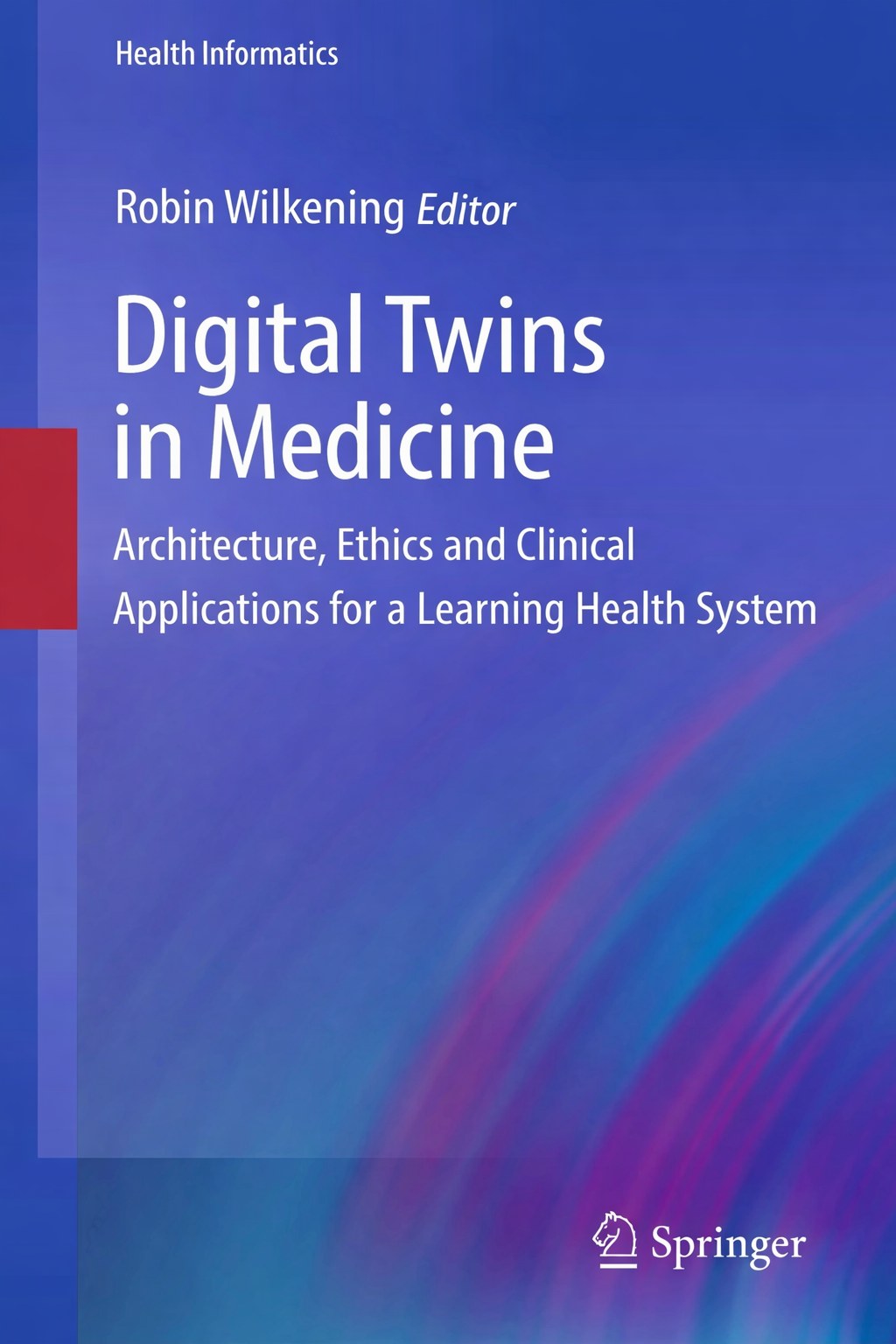
Book: Digital Twins in Medicine
Architecture, ethics and clinical applications for a learning health system. Edited by Robin Wilkening: 13 chapters by 37 authors, Open Access in the Springer Health Informatics series.
Contribute
OpenTwin Lab is developed openly and collaboratively.
Contribute to standards, pipelines, and validation methods.
Open Source
MIT-licensed. Maintained under the Open Science Foundation on GitHub.
Standards · Protocols · Reference pipelines · Validation